In our previous blog post Every millisecond matters, we highlighted some of the major benefits of UWB-based wireless gaming peripherals – mice, headsets, keyboards – and why these benefits are generating so much excitement among gamers eager to get their hands on the first generation of UWB gaming devices. With 60X lower latency and 40X better energy efficiency than legacy Bluetooth-based gaming peripherals, these devices will equip gamers to play faster and fiercer than ever before with peripherals that stay charged and ready for action for far longer than they do today.
It’s worth pausing on those 60X/40X performance metrics for a moment – this is seriously impressive. Within the wireless semiconductor community, UWB’s performance advantages have been well understood for years and we’ve perhaps become desensitized to their real-world implications as we readied for UWB’s commercial roll-out.
The gaming community, on the other hand, is only just beginning to hear about UWB’s major benefits for ultra-low latency and ultra-slow battery drain. For gamers, performance improvements up to 60X are mind blowing. They’re literally game changing.
But what’s often overlooked among these benefits is an additional perk that gamers will be talking about a lot more in the months ahead as they begin to experience UWB wireless headsets firsthand: Compared to Bluetooth, the UWB audio experience is much, much better.
SOUND HAS SUFFERED
Bluetooth has serviced the gaming market capably through the years as the de facto enabling technology for wire-free gaming – despite its well-known limitations in audio quality. Since Bluetooth is limited to a very narrow bandwidth, audio data compression must be applied in order to squeeze an otherwise bulky audio signal through a narrow pipe, and this degrades the signal. Bluetooth codecs are inherently lossy in that a lot of source audio data is stripped away – whereas CD-quality audio is achieved with a 1,411 kbps (kilobits-per-second) data rate, a Bluetooth codec renders that down to about 300 kbps.
For many gamers, lower-quality audio was a sacrifice they were willing to make if it meant ditching their tangled mess of wire-connected controllers and headsets in favor of unencumbered wireless gameplay. But with the imminent market arrival of UWB gaming headsets, gamers no longer have to make this sacrifice.
WIRELESS MOBILITY AND GREAT SOUND
UWB enables 10X more data throughput than BLE, and as a result, there’s no need to compress the audio signal for wireless delivery to your UWB headset. This ensures that the gaming sound stage you’re hearing with UWB headsets is considerably more detailed that what’s possible with Bluetooth today.
And this sound clarity is really important to gamers! For starters, it enables a more immersive and entertaining gaming experience in general. More importantly, better sound can improve your actual gameplay performance – it ensures that crucial, positional audio cues aren’t obscured from your perception due to data compression.
Enhanced directional audio allows you to pinpoint enemies and react to them faster. Your situational awareness depends in large part on your ability to assess every available audio cue, and if you can’t hear the footsteps of the player approaching behind you, it’s probably already too late.
UWB’s ability to handle uncompressed audio extends to the headset microphone as well. This enhances overall voice quality and detail for improved communication with teammates – or competitors, if trash talking is your thing.
SPARK-enabled UWB wireless gaming headsets allow gamers to finally ditch the wires while making zero compromises in audio quality. And when you factor in the latency and battery life benefits, it’s easy to understand why gamers are so excited.
One of the best things about our conversations with customers is the unbridled excitement they share for ultra-wideband (UWB) technology. We relish those moments when their eyes widen as the implications and advantages of UWB reveal themselves in full – when it becomes plainly apparent that UWB isn’t just some ho-hum incremental speed boost or niche connectivity fad.
UWB is much more than that.
As envisioned today, UWB is the future of short-range wireless communication. Everywhere Bluetooth resides today – across untold commercial and industrial applications – UWB can potentially reside tomorrow, breaking decades-old performance barriers in its wake. From our earphones to the edge, UWB will deliver our wireless data – and there will be a lot of it – far faster and more energy efficiently than many of us ever imagined.
Many of us, but not all of us. Our customers have big imaginations! And SPARK does too.
It’s what fueled us on our relatively speedy journey from start-up to global competitor. SPARK parlayed a $1M bet on our technology into one of the fastest start-up maturations among any chip company in recent history. That tiny seed investment – and the strength and support of our ecosystem – sustained us all the way through our first production tape-out. In the semiconductor community, this is unheard of.
WITH A LITTLE HELP FROM OUR FRIENDS
It’s said that no one does it alone, and SPARK is no exception. In late 2016, we had the great fortune to be embraced into Silicon Catalyst’s accelerator program, where we benefitted from unfettered access to industry luminaries and a robust partner ecosystem to help guide our early decision making. The program is specially tailored for chip startups, and it affords easier, earlier access to invaluable MCU/processor IP, among other key resources.
We learned some invaluable lessons along the way, imparted by the foremost design houses and technology and foundry partners. Above all, we learned some of the many ways we can help streamline our customers’ product and technology development paths, minimize their risks, and maximize their overall design/IP versatility as they continue to evolve their product portfolios and businesses. This in turn helps our customers get to market faster, while helping to establish a lasting, flexible foundation for success.
And time to market is everything. As an industry, we’re amassing at the gateway to the UWB revolution, and nobody wants to be late as the door swings open.
For an inside look at SPARK’s trajectory from start-up to UWB technology leader – and the challenges we had to overcome to get there – be sure to check out SemiWiki’s recent podcast ‘Silicon IP for Early-Stage Semiconductor Companies (Episode #25)’. SPARK’s own Fares Mubarak is joined by the CEOs of Dover Microsystems and Espre Technologies for a spirited discussion about the requirements and challenges unique to early-stage chip companies investigating and selecting IP to underpin their products, discussing both the technical and business aspects of securing IP for one’s designs.
It would be hard to overstate just how competitive hardcore gamers are these days.
With a passion to win – and precious bragging rights at stake – gamers painstakingly seek every conceivable advantage to enhance their playing performance. And as the competition rages on, the popularity of live-streamed gaming is exploding. Goldman Sachs predicts ‘eSports’ to reach almost 300 million viewers by next year. For a sense of scale, this is on par with NFL viewership numbers.
Speed is everything when it comes to outperforming your opponents, and latency is, therefore, a major concern among die hard gamers. So it’s no surprise that they sometimes go to great lengths to enhance their playing speed and response time, tweaking their performance whenever and wherever they can.
THE NEED FOR SPEED
In terms of hardware, this can include blazingly fast GPUs/graphics cards for maximum processing horsepower, and displays that can refresh up to 300 times per second to ensure stunningly precise image and movement simulation. But this is just the beginning for the hardcore gamer, who considers every element from the network all the way to the mouse.
Gamers today may seek out fiber to the home (FTTH) network connectivity to enable latency in the single-digit milliseconds, and will run speed tests (pings) to verify and calibrate their network performance. Routers are tested and tuned for quality of service (QoS), and some gamers manually seek and select the regional game servers located closest to them in order to minimize latency.
So what about that humble mouse? For high-end gaming set ups, that “humble mouse” can easily run hundreds of dollars, particularly for ultra-light mice with finely balanced weight and ergonomic profiles. As you scale up for wireless mice that liberate you from the tangle of cords/cables that have proven – time after frustrating time – to be a deadly interference with fast, fluid gameplay motion, the price points tend to scale up accordingly. These premium wireless gaming mice aspire to deliver wired-like performance and latency without the wires. Except they don’t, because they can’t.
At least not yet.
MOVE OVER, BLUETOOTH
For all the investments that hardcore gamers make in their gear to minimize latency and maximize performance, their Bluetooth-connected wireless mice – as well as keyboards and headsets – will literally always underperform against wire-connected devices owing to the inherent limitations of Bluetooth technology itself. Even already existing wireless RF mice (not on Bluetooth) that connect using a USB dongle are not much better in performance.
So you’ve paid all this money for ultra-low latency – from your network, to your home, to your computer, to its peripherals – and yet you could ultimately squander all of this amazing performance with…your mouse?
When gamers press the mouse button, they want an instantaneous response. It’s really that simple. But Bluetooth can only deliver response speeds of 20 to 30 milliseconds at best.
We’ve got good news for you, gamers! Leveraging ultra-low latency ultrawide band (UWB) connectivity, SPARK has demonstrated 1 millisecond latency for UWB wireless gaming peripherals, and we’re well along the path to achieving 0.5 and even 0.2 milliseconds. Not only is this far beyond what Bluetooth could ever do, it’s even faster than what many commercially available USB-wired mice can deliver today.
NO MORE COMPROMISES
SPARK is working closely with customers to bring UWB-caliber performance and latency to gamers everywhere with a new generation of wireless mice, headsets and other peripherals that close the performance gap with wired alternatives once and for all. We anticipate making some exciting news on this front in the months ahead as the countdown to CES 2022 begins. UWB wireless technology will be centerstage for many of the gamers in attendance, and we look forward to demonstrating all that UWB has to offer for hardcore gamers seeking that extra competitive edge.
Industry watchers have been hotly anticipating the arrival of ultra-wideband (UWB) connectivity technology for commercial applications for many months now, as rumors in the media have swirled about smartphone makers coming to market soon with UWB-enabled products and features. Wired was among the first publications to forecast the impending deluge of UWB capabilities for consumers in a story from eagle-eyed editor Brian Barrett speculating about the use cases for Apple’s new U1 chip, designed into the iPhone 11 and iPhone Pro. His September 2019 story – aptly titled, “The Biggest iPhone News Is a Tiny New Chip Inside It” – proved to be prescient.
Apple answered the rumors with the recent unveiling of its new Apple AirTags – tiny tracking devices developed by Apple to help users locate their car keys and other personal belongings via UWB connectivity. An avalanche of media coverage ensued, as editors seized the opportunity to educate readers on UWB’s positioning in the technology market as a high-speed, high-precision alternative to Bluetooth and WiFi – SPARK’s highly optimized UWB implementation goes a step further and delivers all these benefits and more at extremely low power.
Samsung’s initiatives in UWB are likewise attracting attention, and industry consensus points toward an incredibly bright future for UWB technology as it leapfrogs legacy RF interconnects to set new performance benchmarks. SPARK’s own Frederic Nabki summed things up perfectly in a related story from Brian Chen of the New York Times on Apple’s new AirTags. Per Nabki, “This is the tip of the iceberg.”
Chen agrees: “Apple’s new tracking accessory is a precursor to better wireless gadgets to come.”
MASSIVE MARKET POTENTIAL
Stephen Shankland of CNET gave Apple’s AirTags a similarly in-depth analysis. In his story, he sets out to enumerate the myriad ways “ultra wideband makes your life easier,” while assessing the seemingly limitless target applications for UWB, including automotive apps, for example. Per Shankland, “carmakers including Audi, BMW and Ford are also hot for UWB.”
Shankland’s story includes a staggering market forecast from ABI Research analyst Andrew Zignani, who expects shipments of UWB-enabled devices to surge from 150 million in 2020 to 1 billion in 2025. “Once a technology becomes embedded in a smartphone, that opens up very significant opportunities for wireless technology,” said Zignani.
THIS IS JUST THE BEGINNING
We’ll undoubtedly be seeing a lot more media stories like this in the months ahead as the technology and market potential for UWB begins to be realized within the consumer technology market, with major implications for the next-generation of smartphones, wireless gaming peripherals, audio earphones and much more.
While UWB is mostly being leveraged for ranging and positioning applications today, big opportunities are also in store for ultra high speed wireless communications. As UWB is considerably more efficient at transmitting data, it will soon be possible to wirelessly stream rich multimedia with extremely low latency. This capability will be invaluable for any wireless application designed for near real time responsiveness – and that’s a long list of apps.
It’s an exciting time for SPARK as we engage with customers seeking to capitalize on UWB in a hotly competitive marketplace. And there’s no doubt in our minds that our UWB technology will open up a whole new realm of wireless connectivity applications – well beyond what we can imagine today.
If you start with a blank page to design a short range wireless protocol that minimizes power consumption and latency and maximizes data rate, you would probably go through this thought process: First, minimize the time the transmitter and the receiver are powered on. Second, ensure that the transmitter and receiver can be started and shutdown as quickly as possible. This is the approach SPARK Microsystems has taken for its UWB transceivers.
On the phone, latency means echos and talking over each other. We can adapt to that, so wireless phone headsets are popular. With virtual reality, latency means dizziness and “VR sickness” because visual events lag behind user actions. VR headsets remain wired to minimize latency and because they use so much power. UWB offers such a dramatic reduction in latency and power consumption that wireless VR and AR suddenly become possible. And you could stop talking over everyone on the phone.
The Story of Ultra-WideBand – Part 3: The Resurgence
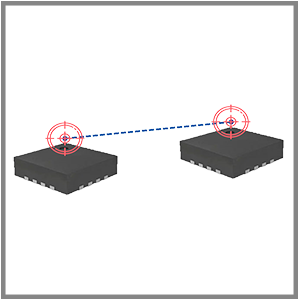 ODFM failed in the opening years of the 2000’s. But UWB was alive and well in military RADAR, forestry applications, through-wall detection in urban areas, and imaging for search and rescue operations and obstacle avoidance. All of these applications took advantage of UWB’s ultra-high resolution, which enables object positioning, characterization and identification. As more and more engineers were exposed to UWB’s unique combination of low latency, low power and high bandwidth, more new applications began to appear.
To find out what happened, read Part 3 of the UWB story on SemiWiki
The Story of Ultra-WideBand – Part 2: The Second Fall
 UWB almost made a comeback in the last decades of the 20th century. RADAR kept wideband research alive through World War 2 and the Cold War. By the 1990’s, companies and consortia around the world began lobbying for frequency allocations for UWB communications. In 2002 the FCC allocated spectrum in the US, and ETSI fllowed a few years later with European spectrum.
To find out what happened, read Part 2 of the story on SemiWiki
Why did Apple spend over a quarter-billion dollars to build UWB into the iPhone 11? In the first part of a 5-part series on SemiWiki, SPARK Microsystems co-founders Frederic Nabiki and Dominic Deslandes go all the way back to the origin of UWB to figure out the answer. Heinrich Hertz invented the spark gap transmitter in the 1880s, and Guglielmo Marconi improved it enough in the early 20th century that Titanic had one onboard that fateful night in 1912.
Read part 1 of the detective story here
Mark McDowell is a Partner at Real Ventures and co-founder of Acta Wireless Capital. We asked him why, out of the hundreds of wireless startups he has evaluated over the last few years, he chose to invest in SPARK Microsystems.
“Everybody knows that wireless IoT is exploding,” Mark replied. “And everybody knows that the battery problem is unsolved. So the products shipping today either have severe bandwidth and power restrictions, or need their batteries changed every couple of years. SPARK changes all that.”
“Before SPARK, you had to compromise on either bandwidth or power,” he continued. “And latency is always an issue at lower power. What excites me the most about SPARK UWB technology is that it addresses all three of these wireless constraints simultaneously. This is going to enable new applications we haven’t seen before, especially once 5G deployments pick up steam. Virtually every wireless carrier lists latency as one of their top reasons for deploying 5G, because it has 1/10 the latency of 4G. That opens up a whole new range of real-time mobile applications, which will create even more demand for SPARK’s UWB solution.”
Mark led SPARK’s $5M seed rounds in Nov 2017 and Jan 2020 and is a member of SPARK’s Board of Directors. We asked him to comment on the company’s progress. “It has been very exciting watching SPARK grow their sales, marketing, customer support, engineering and operations staff over the last few years as they get ready for qualification and volume production in the third quarter of this year. Customers have been eager to get their hands on the development kits, and the new products they are creating are game changers.”